Industrial Automation and Electrical Engineering for Hydroelectric Power: What It Takes to Get It Right
Electrical engineering
Industrial Automation
Hydroelectic
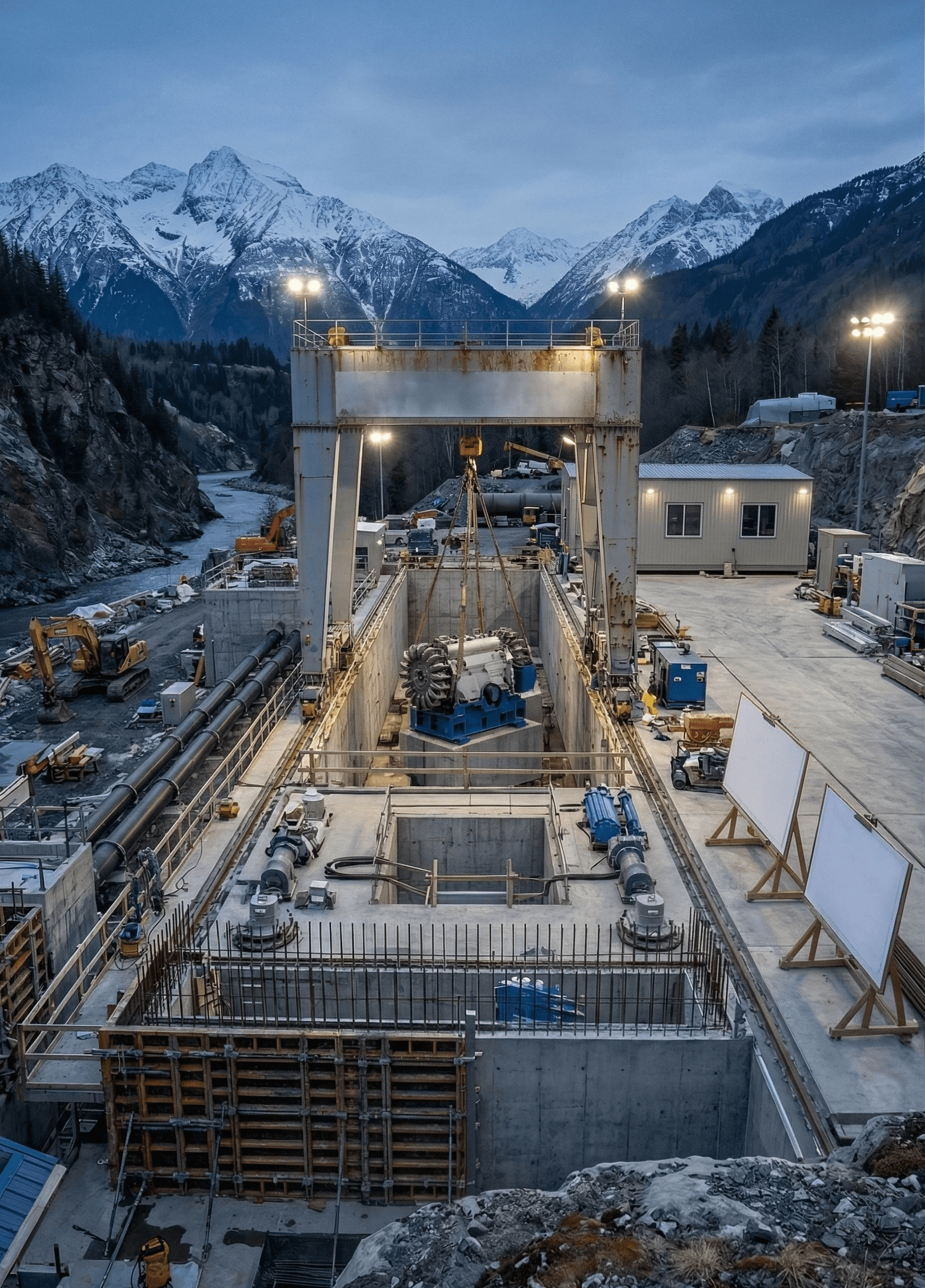
Published by Alaska Automation | Electrical, Mechanical & SCADA Engineering
Hydroelectric power plants are among the most mechanically elegant energy systems ever built — water falls, a turbine spins, a generator produces electricity. The physics are straightforward. The engineering required to make that process operate safely, reliably, and automatically at a remote Alaska facility is considerably less simple.
Industrial automation and electrical engineering are what transform a hydro project from a construction achievement into a functioning power plant. This article focuses on those disciplines specifically: the automation architecture, the electrical systems design, and the integration work that determines whether a hydro facility will operate as intended over decades of service.
The Automation Imperative in Modern Hydro
Early hydroelectric plants were operated by on-site crews who manually adjusted governors, opened and closed valves, and monitored gauges. Modern hydro facilities — particularly the small-to-medium run-of-river projects that are most relevant for Alaska communities and industrial operators — are designed to operate autonomously, with human oversight provided remotely and periodic maintenance visits replacing continuous staffing.
This shift from manual to automated operation is made possible by three integrated systems: the plant control system (PCS), the protective relay infrastructure, and the SCADA platform that ties everything together and provides the operator interface. Getting the integration between these three systems right is the central challenge of hydro automation engineering.
Plant Control System Architecture
The plant control system is the operational brain of a hydro facility. It executes the sequences that start and stop generating units, manages transitions between operating modes, coordinates multiple units in multi-unit plants, and responds to both normal operating commands and abnormal conditions.
Unit Control
For each generating unit, the unit controller handles the automatic start sequence: opening intake valves, ramping turbine speed to synchronous speed, synchronizing the generator to the grid, and ramping up to the commanded load setpoint. The same controller manages load changes, load rejection events, and shutdown sequences — both normal shutdowns and emergency trips triggered by protective relays.
The programming of these sequences must account for the full range of conditions the unit may encounter: cold starts in winter temperatures, synchronization under varying grid frequency conditions, and safe response to faults that occur at any point in the start or load ramp sequence. Poorly designed unit control logic is a significant source of operational problems in small hydro plants.
Governor and AVR Integration
The turbine governor controls speed (and therefore frequency) by adjusting the turbine's water flow. The automatic voltage regulator (AVR) controls generator terminal voltage by adjusting field excitation. Both systems must be configured and tuned for stable operation, and their setpoints and response characteristics must be compatible with the grid the generator is feeding into.
For isolated grids — common in rural Alaska, where a hydro unit may be operating in parallel with diesel generators — governor and AVR tuning is particularly critical. Interactions between the hydro unit's governor response and the diesel governor can produce instability if both systems are not configured to work together. This tuning work requires a combination of analytical modeling and field commissioning time, and it is not something that should be left to the last week before a project goes live.
Protection Relay Scheme
Generator protection is the safety layer that prevents a fault from becoming a catastrophe. A properly designed protection scheme includes multiple independent relay functions, each monitoring a different failure mode:
Differential protection (87G): Detects internal generator faults by comparing current flowing into and out of the generator. Fast-acting and highly sensitive.
Loss of excitation (40): Detects the loss of field excitation, which can cause the generator to absorb reactive power and damage the machine.
Over/under voltage (59/27) and frequency (81O/U): Protects against abnormal grid voltage and frequency conditions.
Out-of-step protection (78): Detects loss of synchronism with the grid, preventing the mechanical stress of an unsynchronized generator.
Ground fault protection (64/51G): Detects ground faults in the stator winding and neutral circuit.
Protection relay selection, setting calculations, and coordination studies are engineering deliverables that require licensed professional engineering review. Relay settings that are too sensitive cause nuisance trips; settings that are not sensitive enough fail to protect the machine under fault conditions. Both are unacceptable outcomes.
Electrical Systems Design
Switchgear and Generation Interconnection
The generation bus — the electrical connection point where the generator output connects to the plant's distribution system and ultimately to the grid — is the heart of the plant electrical design. Generator circuit breakers, bus protection, instrument transformers (CTs and PTs) for metering and protection, and the step-up transformer interconnection are all designed as part of this scope.
For small hydro projects in Alaska, medium-voltage switchgear in the 4.16 kV to 13.8 kV range is typical. Equipment selection should account for the facility's ambient temperature range, the availability of spare parts, and the manufacturer's service support for remote locations.
Auxiliary Power Systems
Every hydro plant has auxiliary loads: cooling systems, plant lighting, battery chargers, communication systems, and control power supplies. The auxiliary power system design ensures that these loads have reliable power under all plant operating conditions — including the condition where the generator has tripped offline and the plant is drawing power from the grid to support restart.
For remote off-grid facilities, the auxiliary power design must also address what happens when the grid is unavailable: emergency batteries, a backup diesel generator, or a combination of both.
Grounding and Lightning Protection
Proper grounding is both a safety requirement and a functional necessity for reliable control system operation. In Alaska, soil conditions — permafrost, rocky terrain, seasonally frozen ground — can make achieving a low-impedance ground electrode system challenging. The grounding design must account for actual soil resistivity measurements at the site, not assumptions based on published tables.
Lightning protection is also a significant consideration, particularly for penstocks and intake structures that may be exposed on open terrain. Surge protective devices (SPDs) on communications and control cabling are standard practice for remote Alaska installations.
SCADA Integration for Hydro Facilities
What the Operator Needs to See
A well-designed hydro SCADA display gives the operator a clear, intuitive picture of the entire plant: unit status and output, hydraulic conditions (water level, flow, differential pressure), protective relay status, and any active alarms. The display design should follow ISA-101 human-machine interface (HMI) standards, which prioritize clarity and situational awareness over visual complexity.
Alarm Management
Alarm floods — where a single abnormal condition triggers dozens or hundreds of alarms simultaneously — are a well-documented cause of operator error in industrial control systems. Hydro plant alarm systems should be designed following ANSI/ISA-18.2 alarm management principles: rationalized alarm setpoints, alarm shelving for known conditions, and a manageable alarm rate during normal operations.
Remote Access and Cybersecurity
For remote-monitored hydro facilities, the SCADA system needs a secure path for remote access. VPN-protected connections over satellite or cellular, role-based access controls, and audit logging of all operator actions are minimum security measures. NERC CIP standards apply to hydro facilities that meet the threshold criteria for bulk electric system classification — and even for facilities below that threshold, following CIP-inspired practices is good engineering.
The Cost of Getting It Wrong
Industrial automation and electrical engineering mistakes in hydro projects are not abstract problems. A protection relay with incorrect settings can fail to clear a generator fault, resulting in equipment damage that costs hundreds of thousands of dollars and takes months to repair. A poorly tuned governor can produce frequency instability on a rural grid, affecting every customer connected to that system. A SCADA system that cannot be reliably accessed remotely turns every minor operational event into a costly field mobilization.
The investment in getting the engineering right — hiring qualified engineers, allocating adequate time for commissioning and testing, and engaging a team that has done this work in Alaska — is the most cost-effective thing a project owner can do.
Alaska Automation specializes in the electrical, mechanical, and SCADA engineering that makes hydro facilities work reliably over the long term. We work with project owners and developers across Alaska, Canada, and the Pacific Northwest to deliver integrated engineering services from initial design through commissioning and startup. Contact us to discuss your project.